Holiday lighting designed around the house, not a package
Design, installation, in-season service, and January takedown for North Atlanta homes and storefronts, with Buckhead and intown still on the route.
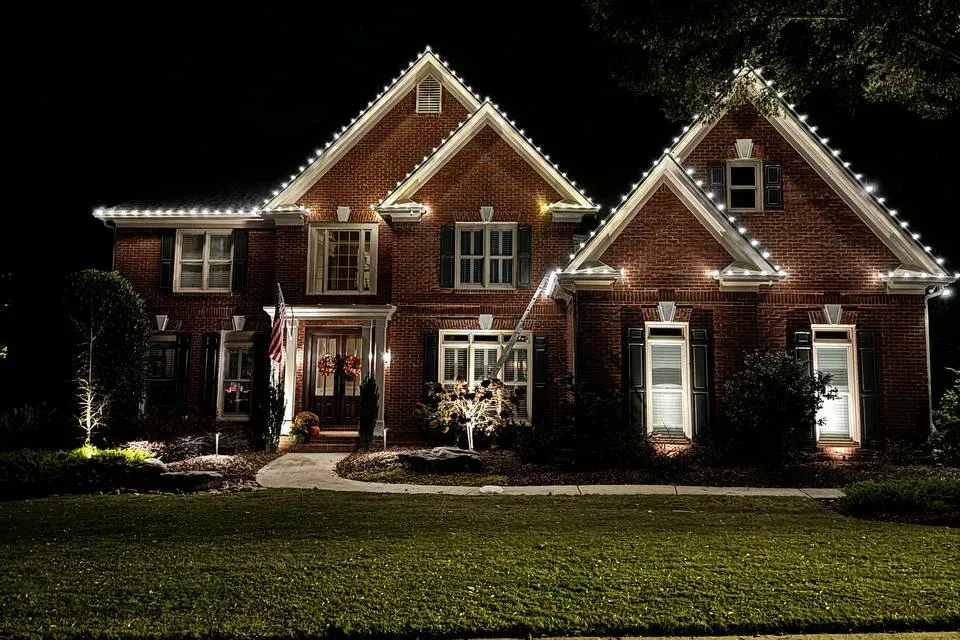
A roofline is a drawing the house already made. Our job is to trace it with light so the architecture is still the subject: the tall gable over a two-story foyer, the pitch of a Tudor gable, the long eave of a bungalow, the columns of a porch.
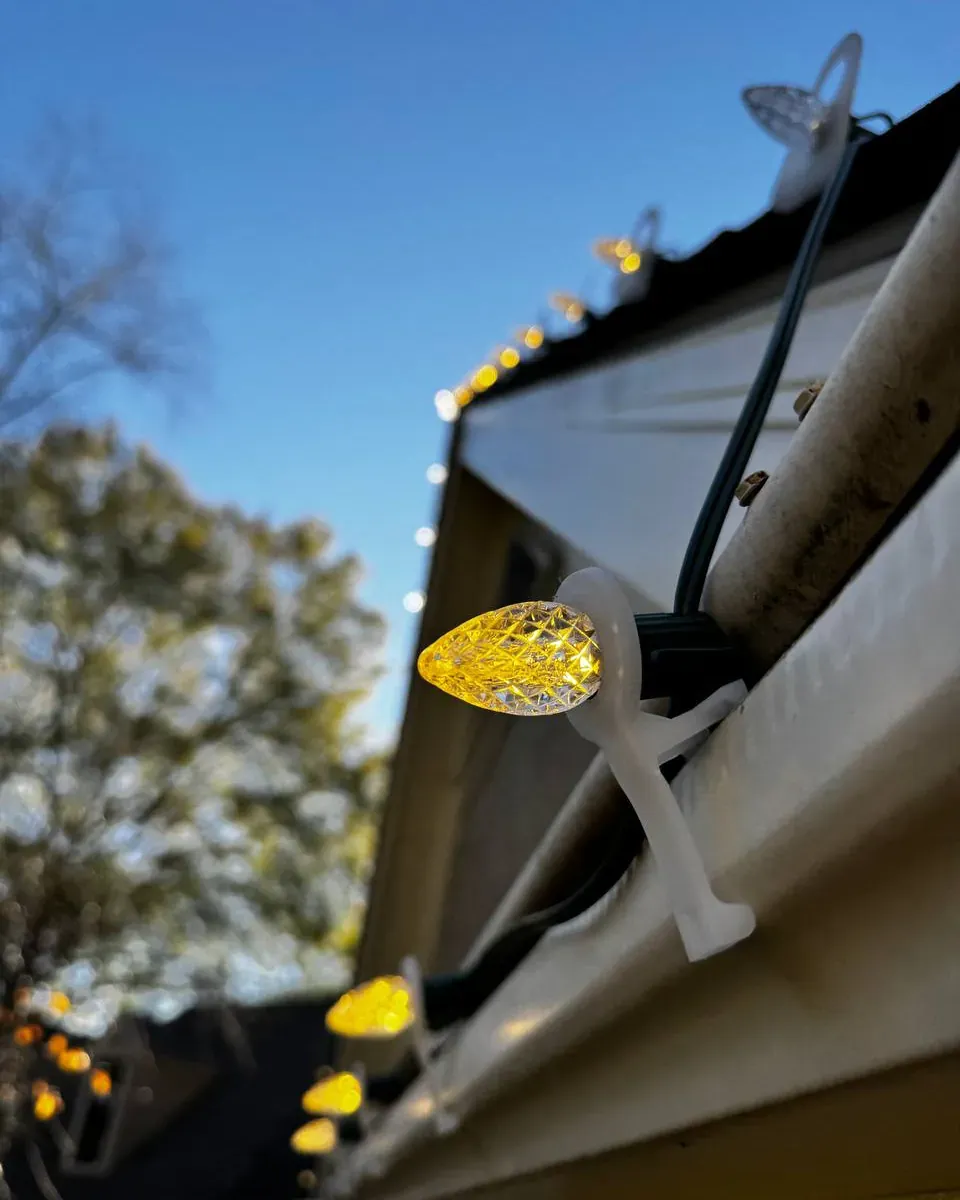
That means choosing a bulb size and spacing that suit the scale of the house, keeping the color temperature consistent from one run to the next, and leaving out the pieces that would crowd the line. It also means nothing stapled, nailed, or screwed into trim, whether it went up in 1995 or a century ago. Clips come off in January and the house looks the way it did in October.
How we light a house
-
C9
The bulb most rooflines carry,
for a line that reads from the street -
2700K
Warm white,
our starting point on brick and stone -
Since 2018
Our installers
on Atlanta rooflines -
January
Takedown month,
strands coiled and labeled
The houses we work on.
Christmas Lights of Atlanta works on the houses that ask a little more of a lighting design: large brick and stone traditionals with two-story foyers and steep front gables, estate lots with tall hardwoods between the house and the road, brick Tudors and Craftsman bungalows on older streets, and the storefronts and restaurants nearby. Our installers have worked Atlanta rooflines since 2018. The work centers on North Atlanta, in Alpharetta, Johns Creek, Roswell, Cumming, Sandy Springs, and Dunwoody, and still reaches Buckhead and intown neighborhoods like Ansley Park and Druid Hills. We start with how the house reads from the curb, then choose the bulb, the color temperature, and the spacing that suit it. The result is quoted in writing, installed on clips with nothing fastened into the house, kept lit through the season, and taken down in January.
How a design comes together
Most designs begin with a photo of the front of the house and the address, sent by text. From that we study the architecture before we count anything. A two-story brick traditional wants the tall gable over its foyer drawn cleanly, with the main eave carried evenly to each corner. A Tudor wants its steep gables and the arch over the door picked out, and usually not every lower eave. A Craftsman bungalow reads best along its low, wide roofline and porch beam. A symmetrical Colonial calls for an even line on both sides of the center, so the spacing has to land the same at each corner. Then we choose the light. C9 bulbs give a bold, readable line from the street on a two-story house; C7s sit closer and finer on a smaller cottage or a porch rail; mini lights belong on trunks, branches, and railings. We default to warm white (around 2700K) on brick and stone, because it sits well with red and tan masonry, and we show cool white or multicolor when the house or the owner leans that way. The quote comes back written and itemized, so each element can be kept or cut.
Where we work
The route leads with North Atlanta: Alpharetta, Johns Creek, Roswell, and Cumming, then Sandy Springs and Dunwoody along the Perimeter. From there it runs through Buckhead, Brookhaven, and Vinings and into the intown historic districts, Decatur, and Druid Hills. The two ends ask different things. The northern suburbs bring tall two-story rooflines, long drives, estate lots, and golf and swim-tennis communities where the houses on a street share a scale. The older neighborhoods bring mature trees over the roofline, narrow streets with no room for a truck in the driveway, slate and clay tile next to asphalt shingle, and trim worth protecting. Working both kinds of house season after season is how a crew learns where a clip will hold and where it will not.
How a season runs
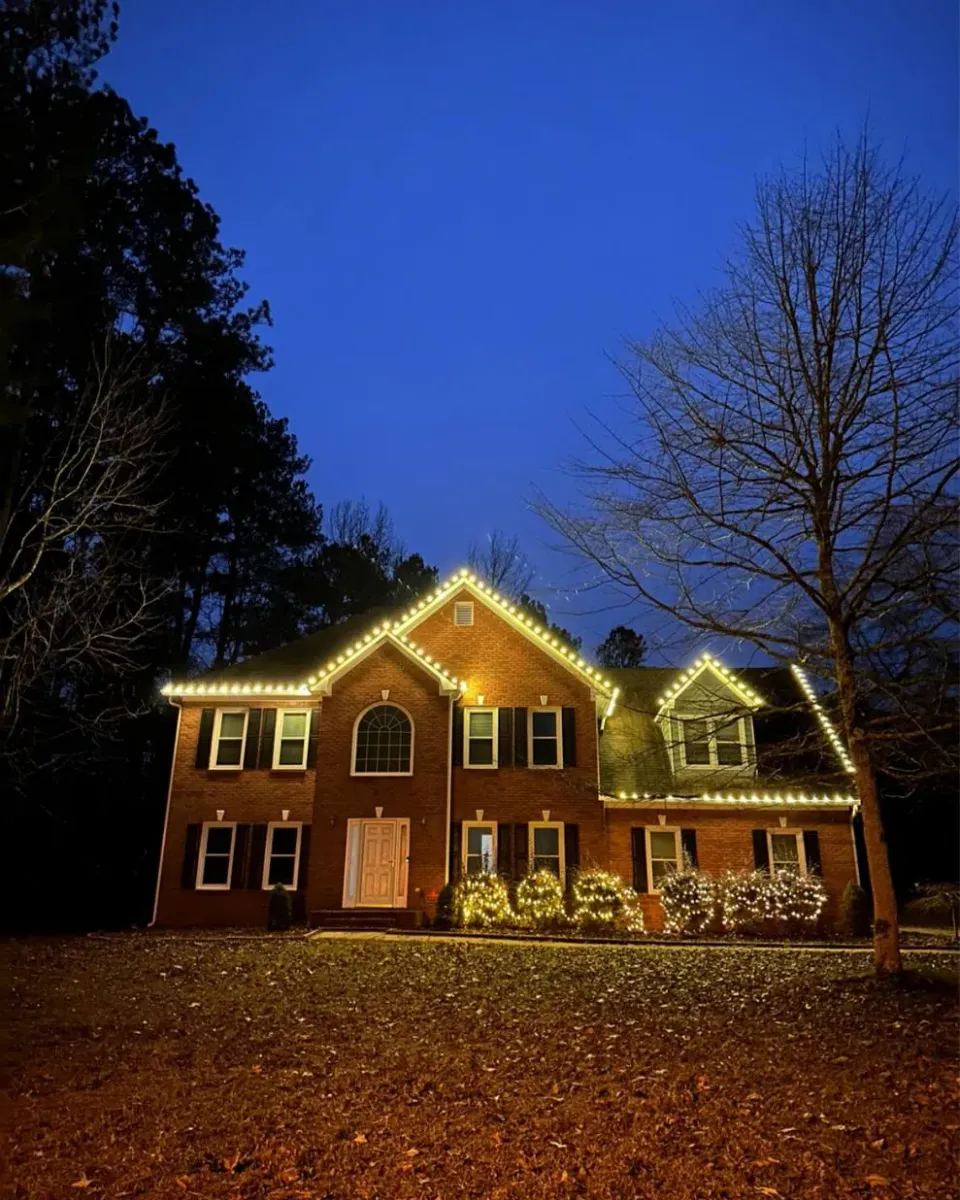
Quotes and design conversations run through early fall. Installation begins in late October and runs to about mid-December, with the earliest-booked dates set first, so the calendar fills from the front. Every run is measured and cut to length from commercial-grade LED strand, and the timer is set before the crew leaves. Through the season, if a section goes dark, a text with a photo puts it on the next service route. In January the display comes down clip by clip, and the strands are coiled and labeled by location. Storage until next season is offered for anyone who would rather not find a shelf for them.
Neighborhoods we work in
Each neighborhood has its own page on the houses, the trees, and what a design there usually involves.
Questions before a design
What people usually ask before they send the first photo.
How long have your installers been doing this?
Our installers have worked Atlanta rooflines since 2018. The focus is large houses across North Atlanta, from Alpharetta and Johns Creek to Roswell and Cumming, along with Buckhead and the older intown neighborhoods, where clipping, spacing, and routing cord take the most care.
Do you design the display, or do I pick from a list?
We design it. Send a photo of the front of the house and we suggest which lines to light, which bulb suits the scale (C9, C7, or mini lights), and whether warm white, cool white, or multicolor fits the materials. Every element is its own line on the written quote, so you can keep or cut any of it. The residential design and installation page walks through it.
Can you light an older or historic house without damaging it?
Yes. Nothing is stapled, nailed, or screwed into the house. Strands ride on shingle clips, gutter clips, and tension wraps, and they come off in January without leaving marks. On slate, tile, or delicate trim we plan the route around what the house can carry.
Do you light storefronts and restaurants?
Yes. Windows, awnings, entries, patios, and the trees out front. We plan around opening hours and outlet locations. See storefronts and restaurants.
What happens after the holidays?
The display comes down in January. Strands are coiled and labeled by location, and we store them until next season unless we agree otherwise. The takedown and storage page has the details.
Start with one photo
Text a straight-on photo of the front of the house and the address to (470) 380-7797, or send it through the contact form. A written, itemized quote comes back, built from the roofline footage, the height and pitch, the trees you want lit, and any wreaths or garland.