Skip to content

Christmas light takedown and storage in Atlanta

Taking a display down carefully is as much a part of the job as putting it up. In January we come back, remove every strand, clip, and piece of greenery, and leave the roofline as we found it. Strands are coiled and labeled by run so next year's install goes back up the same way, and we store them until next season unless we agree otherwise. Text us to add takedown and storage to your quote.

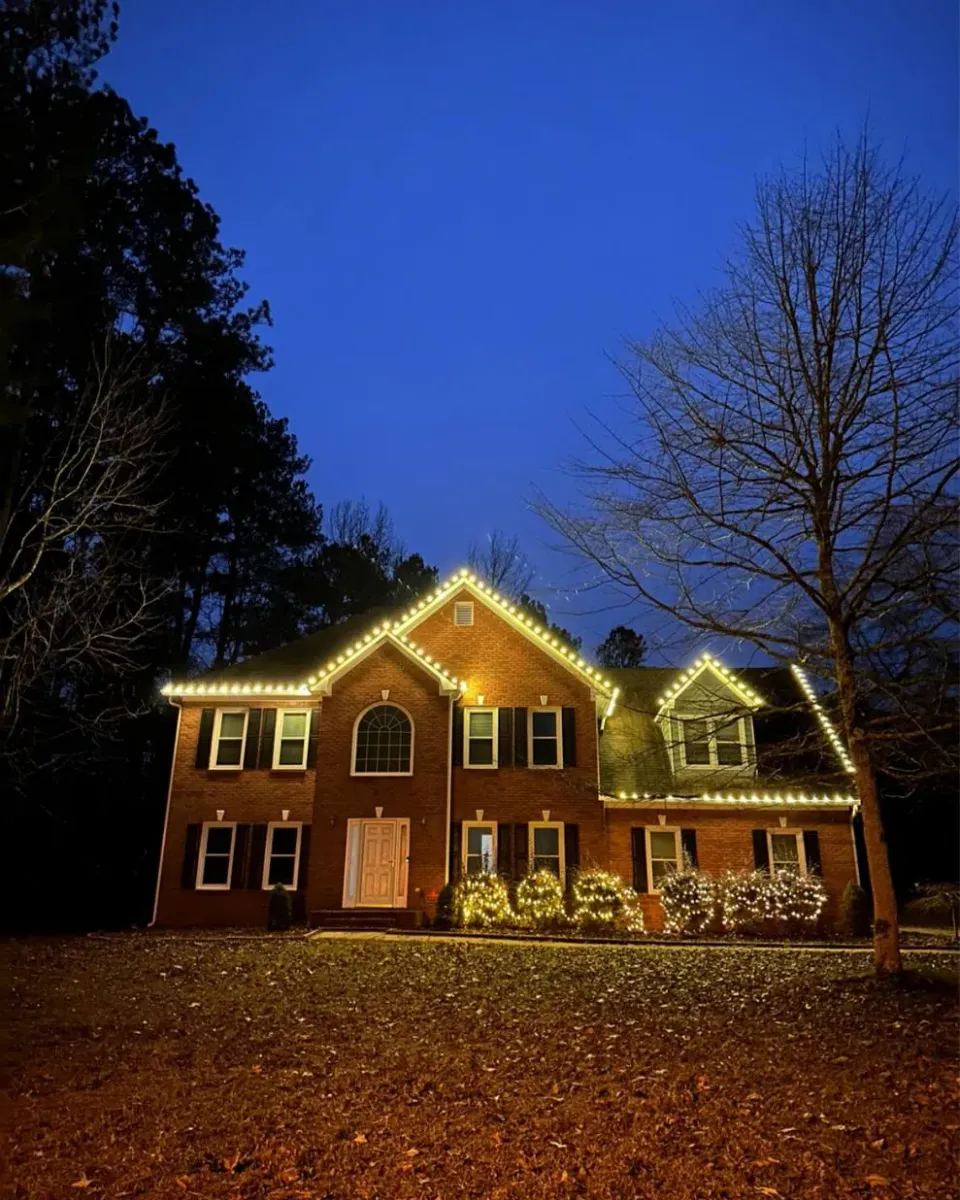
Two-story brick home at blue hour with a lit roofline, a lit dormer, and warm-white shrubs

The second half of every install

Every seasonal display we install comes down in January. It is built into the plan from the start, because a design that goes up with clips has to come off cleanly, and because the way strands are removed decides how easily they go back up. Pulling lights off a gutter in a hurry tangles runs, strains clips, and can lift shingles. Taking them down in order, run by run, avoids all of that.

On takedown day we work the house in the reverse order of the install. Roofline strands come off the clips, and the clips come off with them, so nothing is left under the shingles or on the gutter lip. Tree wraps are unwound from the top down rather than pulled off the trunk. Wreaths and garland come down from windows, doors, and rails, and the hooks and hangers come down too. Timers are removed or reset, and cords are coiled and gathered.

Then the strands are sorted. Each run is coiled, checked for dark bulbs or damaged sockets, and labeled with where it went: front gable, left eave, dormer, oak by the drive. That labeling is what makes a repeat design fast and consistent. A strand cut to fit the left front gable goes back on the left front gable next year, at the same spacing and length. Our residential design service plans those runs in the first place, and takedown keeps that plan intact.

Storage is the default, so nobody ends up with boxes of lights in the garage or the attic until next fall. The labeled strands, clips, and greenery stay together until the next install. For restaurants and shops, takedown is scheduled before open or after close, the same way the storefront install was.

  • Removed in order

    Strands and clips come off together, run by run, so nothing is left on the gutters or under the shingles.

  • Coiled and labeled

    Every strand is labeled by its location on the house, so next season's install matches this one.

  • Checked before storage

    Runs are checked for dark bulbs and damaged sockets while they come down, not in November.

  • Storage until next season

    Labeled strands, clips, and greenery are stored together until the next install.

Why clips make takedown clean

Why clips make takedown clean

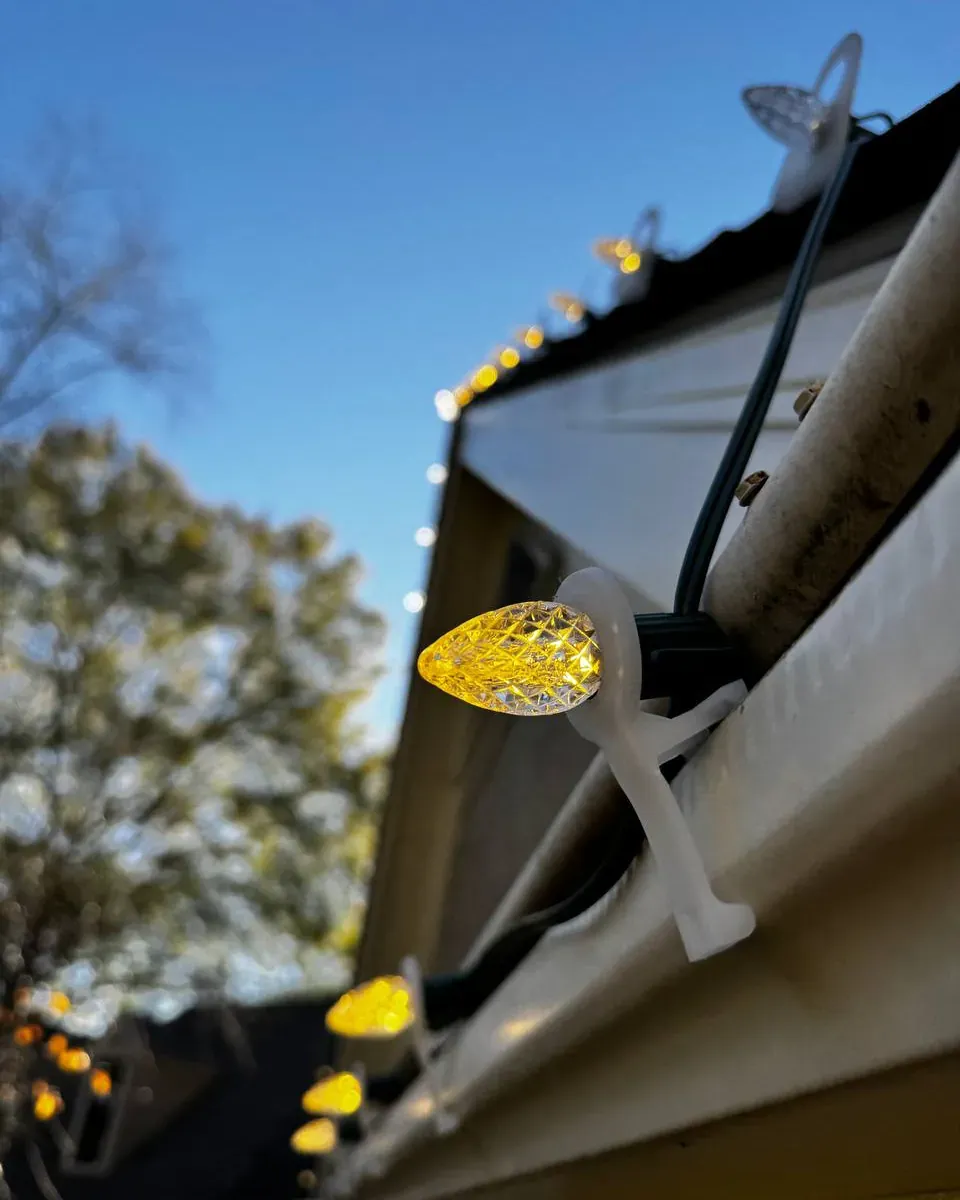
The close-up above shows a C9 bulb held in a gutter clip. Because the clip grips the lip of the gutter rather than being fastened into it, it slides off with the strand at takedown and leaves nothing behind. Shingle clips work the same way on edges without gutters. That is the reason we never staple, nail, or screw seasonal lights to a house: whatever goes up in November should come off in January without a trace.

On older roofs in Ansley Park and Druid Hills, where shingles or slate can be brittle, careful removal matters as much as careful installation.

In practice that means working the roofline from the ladder in the same order it went up, releasing each clip by hand instead of pulling the strand, and checking the gutter lip and shingle edges as we go. Cold January mornings make old asphalt shingles stiff, so on those houses we wait for the afternoon warmth before touching the roof edge. A takedown on a large Atlanta roofline takes a little longer done this way, and it is the part of the job that decides whether next year's install starts on a clean roof.
Unwinding trees and shrubs

Unwinding trees and shrubs

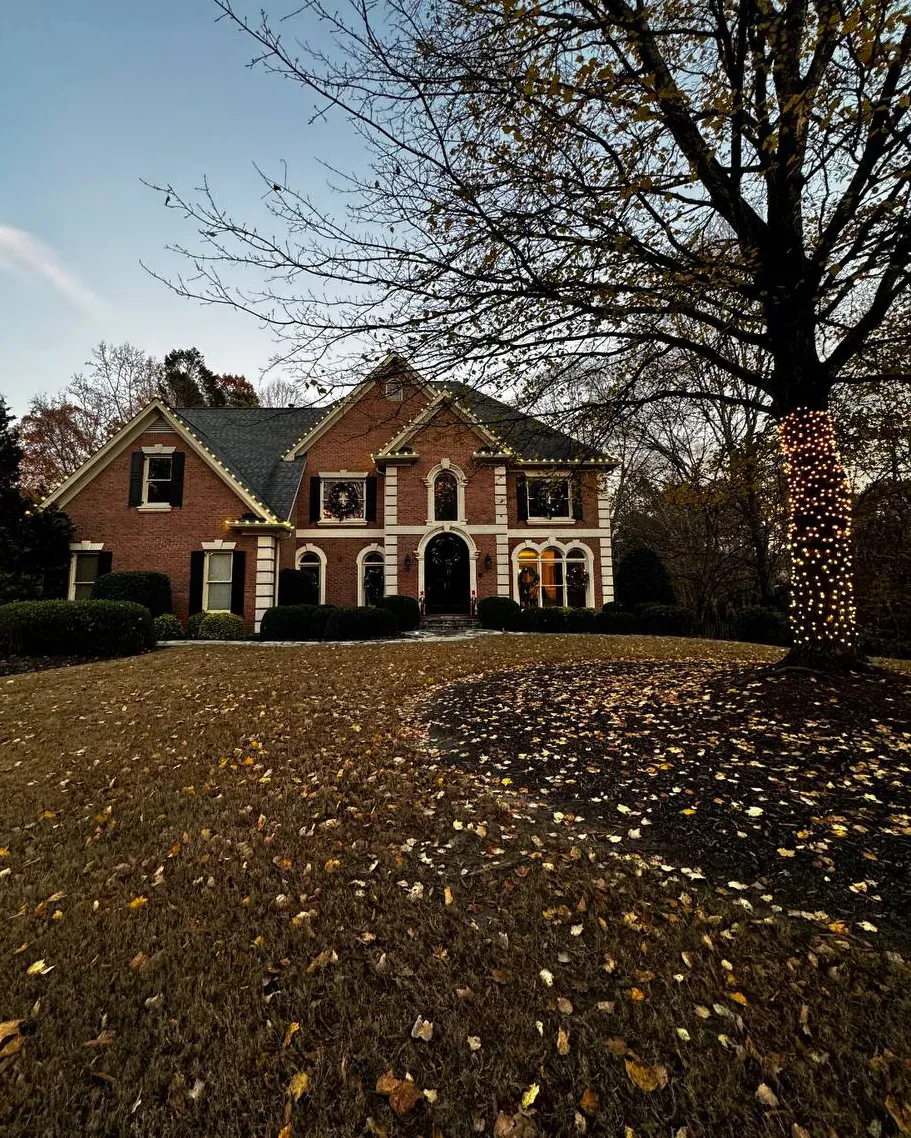
A tightly wrapped trunk like the one pictured has to be unwound, not pulled. We take tree wraps down from the top, keeping the spiral in order, and coil each tree's strands separately. Shrub lights are lifted off rather than dragged across the branches. The tension wraps come off with the strands, so nothing is left on the bark into spring.

This is especially important on the large oaks and magnolias common in Buckhead and Sandy Springs, where one tree can carry a long run of lights, and on the tall front-yard hardwoods of estate lots in Johns Creek and Cumming.

Greenery comes down with the lights

Greenery comes down with the lights

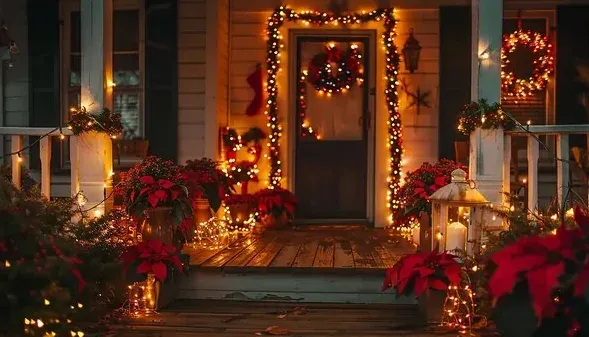
Wreaths and garland, like the porch pictured, come down during the same visit. Lit pieces are checked along with the strands. Hooks and hangers come off the doors and windows, and garland is removed from rails and columns without scraping paint.

If you want the same greenery next season, it is stored alongside the lights. Our wreaths and garland page covers how greenery is planned and hung.

Ready for next season

Ready for next season

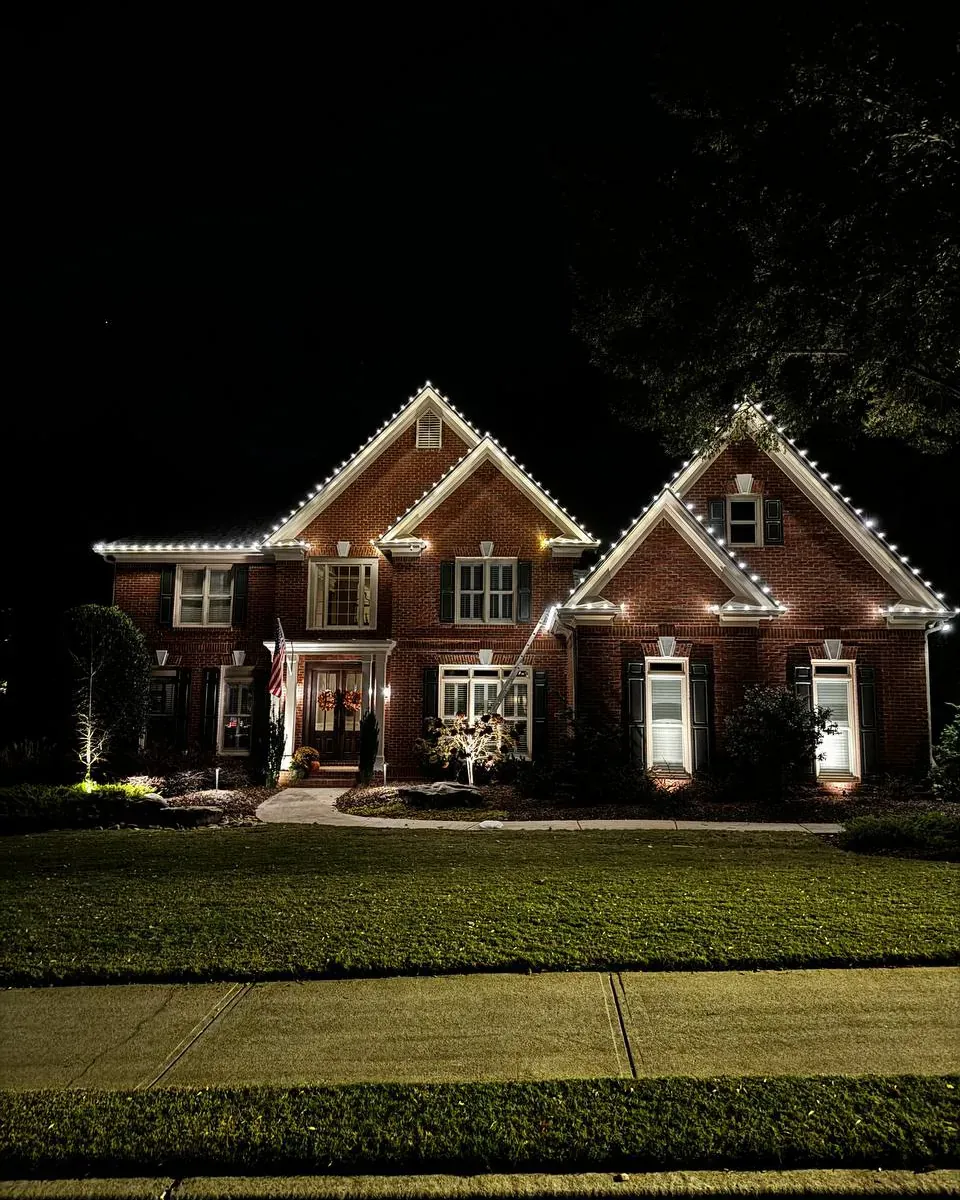
A labeled set of strands makes the next install faster and more consistent. The brick colonial pictured has warm-white C9s on both front gables and the lower roofline. On a large two-story traditional in Alpharetta or Roswell, with a tall foyer gable, a garage wing, and several dormers, a roofline can run to a dozen separate strands, and the labels are what keep each one matched to its place. With each run labeled, the same lines go back up next year at the same spacing, and any design changes are planned from a known starting point.

If you are thinking about a system that never comes down, the permanent roofline lighting page explains how that works and when it fits. Otherwise, book early: install season runs from late October to about mid-December, and our journal post on how far ahead to book explains why earlier dates fill first.

Questions about takedown and storage

What happens to the lights after the holidays.

When does takedown happen?

Takedown runs in January, with each house scheduled on a route. If there is a week that suits you better, or a gate or dog we should know about, tell us when you book and it goes on the schedule notes.

Is takedown included in the quote?

January takedown is part of our seasonal installs, and it is listed on the written quote. Storage until next season comes with it by default, and any different arrangement is written on the quote.

Why not just leave the lights up until spring?

Georgia winters bring wet, freezing nights and the occasional ice storm, and strands left on a roof through February collect leaves and pine straw in the gutter clips. Taking everything down in January keeps the gutters clear, keeps the strands in good condition for next year, and returns the house to its everyday look.

What happens to strands that fail?

We check runs as they come down. Strands with dark bulbs or damaged sockets are flagged so they can be repaired or replaced before the next install, rather than discovered on the roof in November.

Do I have to use storage?

It is the default, not a requirement. If you would rather keep the labeled strands yourself, we agree on that when you book. Keep them dry and out of direct heat, and keep the labels with each coil.

Add takedown and storage to your quote

Text a photo of the house and the address to (470) 380-7797 or use the contact form. Your written quote will list January takedown and storage until next season.

Email christmaslightsofatl@gmail.com

Or send the details here

All services
Text us (470) 380-7797

Text us a photo

Scan with your phone's camera to start a text to (470) 380-7797. Attach a picture of the front of the house.

QR code that starts a text message to (470) 380-7797
Use the quote form instead