Buckhead's older residential streets were laid out for large houses on large lots. Peachtree Heights Park was platted in 1910, and about a year later Charles Black began Tuxedo Park on land that had been part of the Dickey estate. Through the 1920s and 1930s, Andrews Drive, Cherokee Road, Tuxedo Road, Habersham Road, and West Paces Ferry Road filled with Georgian Revival, Tudor, Mediterranean, and Colonial Revival houses by the architects who shaped the city's taste: Philip Shutze, Neel Reid and his firm, Pringle and Smith, Ivey and Crook. The Governor's Mansion still sits on West Paces Ferry. That lineage matters for lighting because these facades are symmetrical and deliberate, and a display that ignores the symmetry looks wrong in a way people notice without being able to say why.
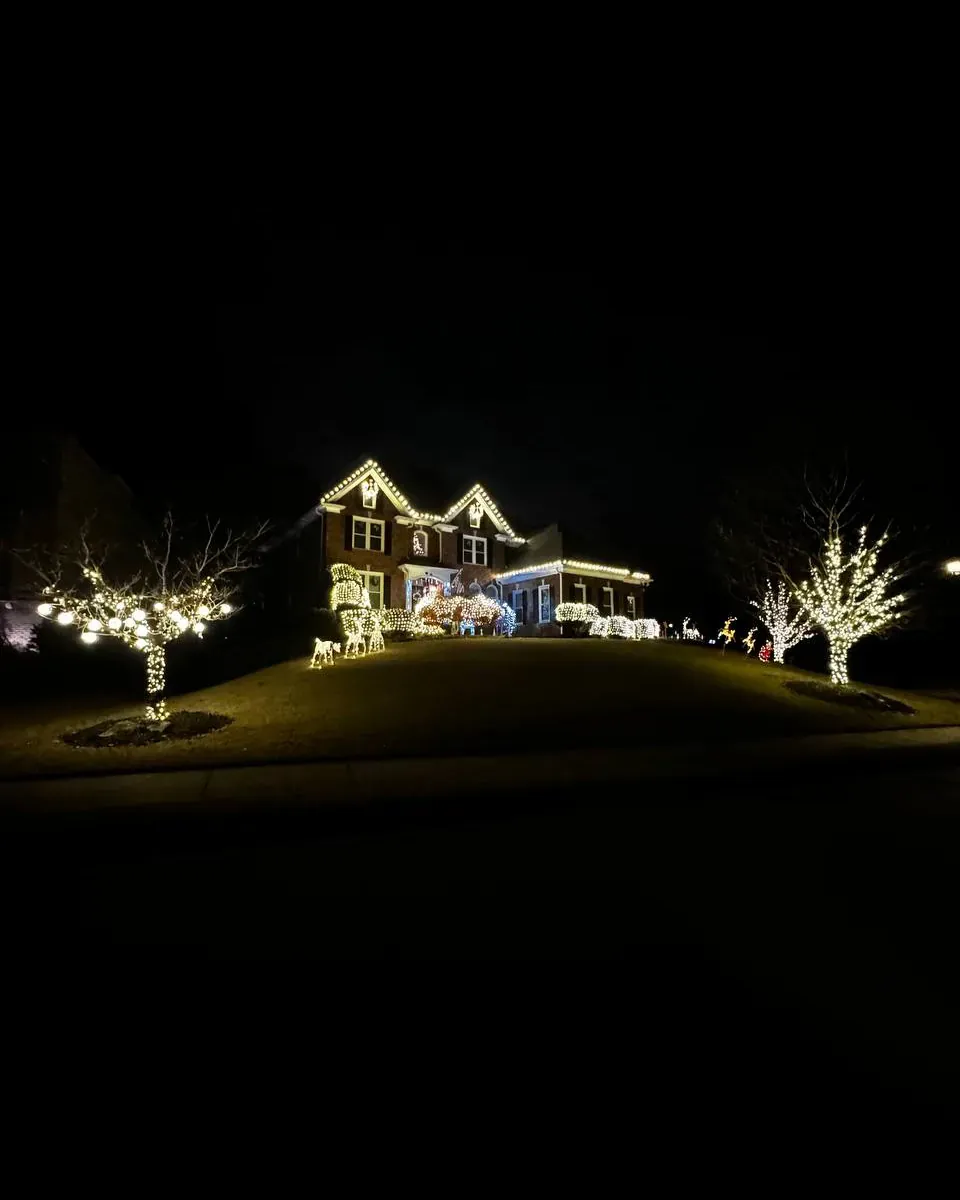
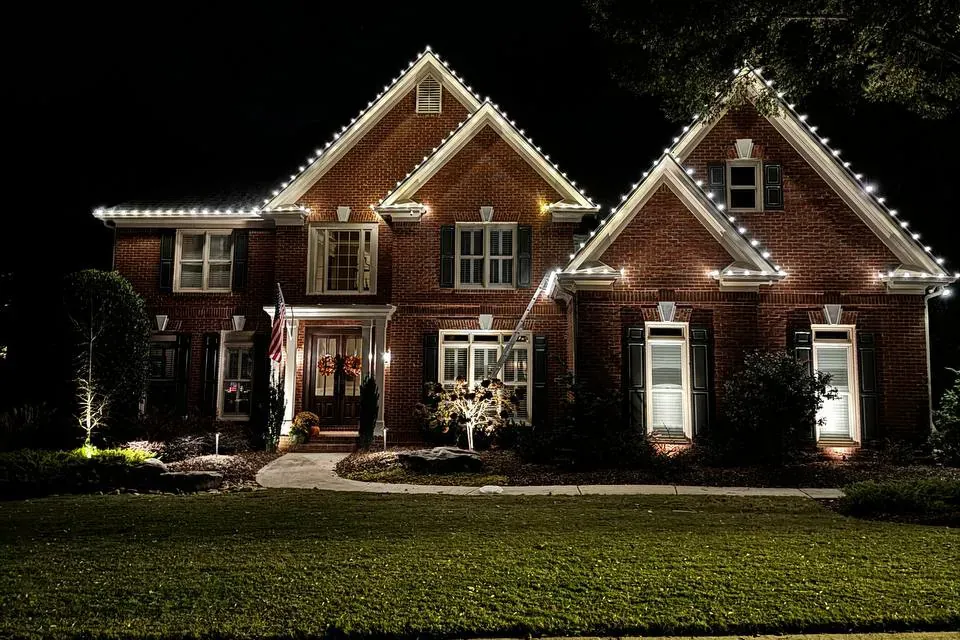
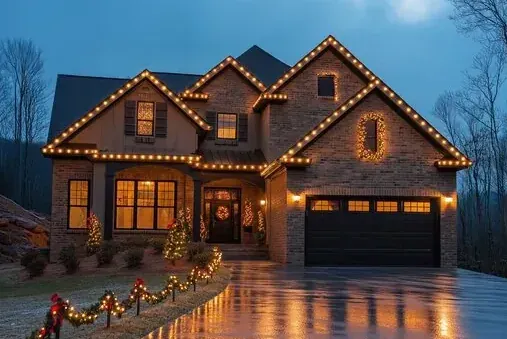
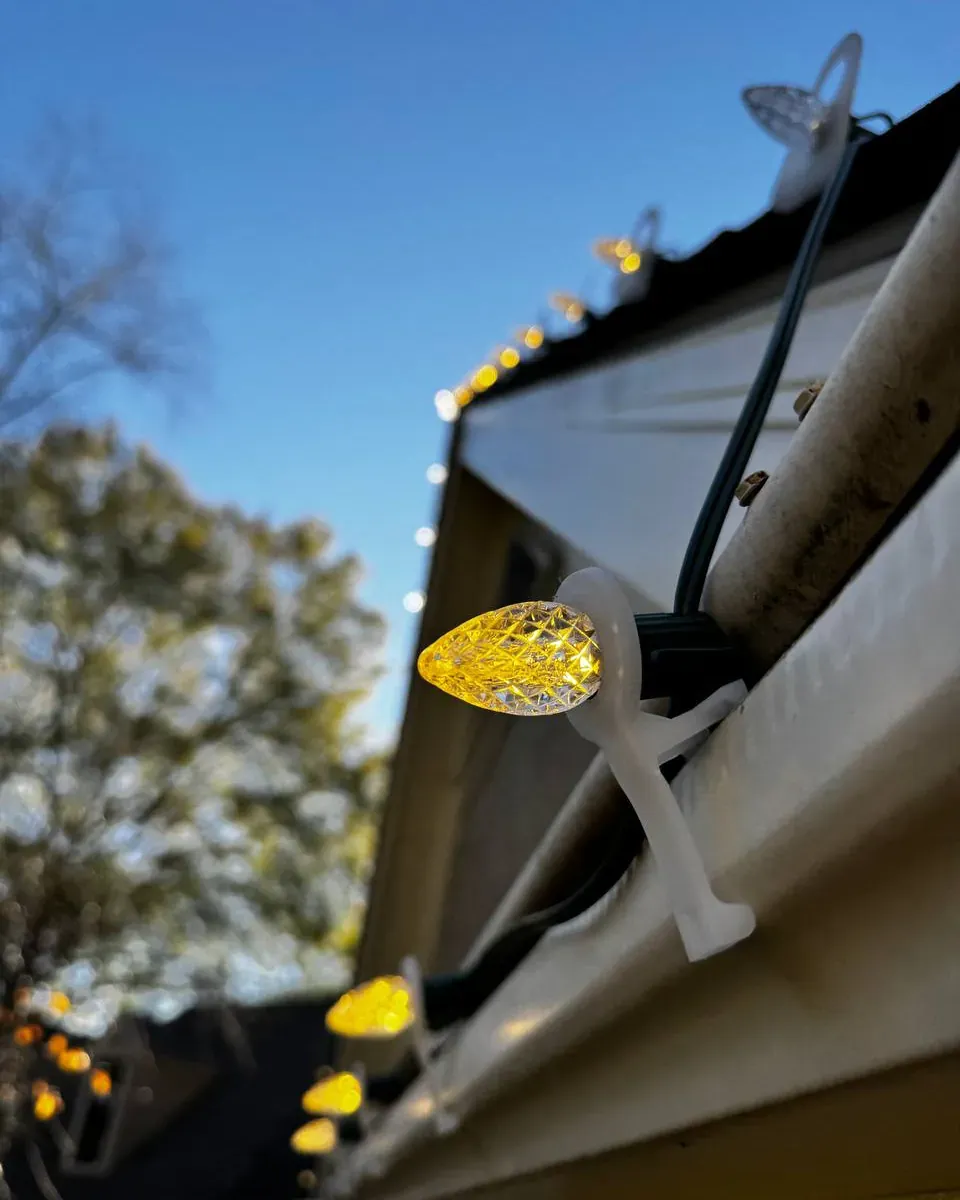
The first design question on a Buckhead estate is distance. A house seen from 150 feet away needs C9 bulbs, and it usually needs them only where the eye goes: the main cornice, the front gables or pediment, sometimes the dormers. Tracing every hip and valley on a complicated slate roof tends to turn the house into a wireframe. We would rather light fewer lines and keep them exactly parallel to the architecture, with the same spacing from corner to corner.
The second question is the canopy. The oaks, poplars, and magnolias on these lots are often taller than the house. Lit well, a pair of trunks and the first limbs frame the facade the way columns frame a door. Lit badly, they pull attention away from it. Our trees and landscape work is planned alongside the roofline so the two read as one composition, and the entry gets wreaths and garland scaled to a large door surround rather than a standard porch.
Buckhead also has a busy commercial side along Peachtree Road and around Buckhead Village, with restaurants and shops that want the storefront lit before the holiday dinner reservations start. Those jobs follow our storefront and restaurant process, with installs scheduled outside service hours.