There are really two Midtowns for our purposes. One is the tower district along Peachtree, West Peachtree, and Spring, with restaurants, hotels, and ground-floor retail. The other is the residential grid east of Piedmont Avenue, where the Midtown Historic District was listed on the National Register in 1999. That district covers roughly 360 acres between 10th Street and Ponce de Leon Avenue, with more than 700 contributing buildings, and it is mostly what people mean when they talk about historic Midtown: Queen Anne and Victorian houses, American Foursquares, Craftsman bungalows, and a scattering of early apartment buildings on streets like Myrtle, Penn, Argonne, and Durant Place.
The houses in that grid sit close to each other and close to the sidewalk. Front yards are short, porches are near the property line, and the view of a roofline is steep and near rather than long and level. That changes the design. A Queen Anne with a turret, a wraparound porch, and three gable faces does not need all of it lit. We usually pick the porch roof and the main front gable, sometimes the turret alone, and let the rest of the house stay dark so the shape reads. On a bungalow the porch is the whole show: the eave over the porch, the column bases, a garland along the rail.
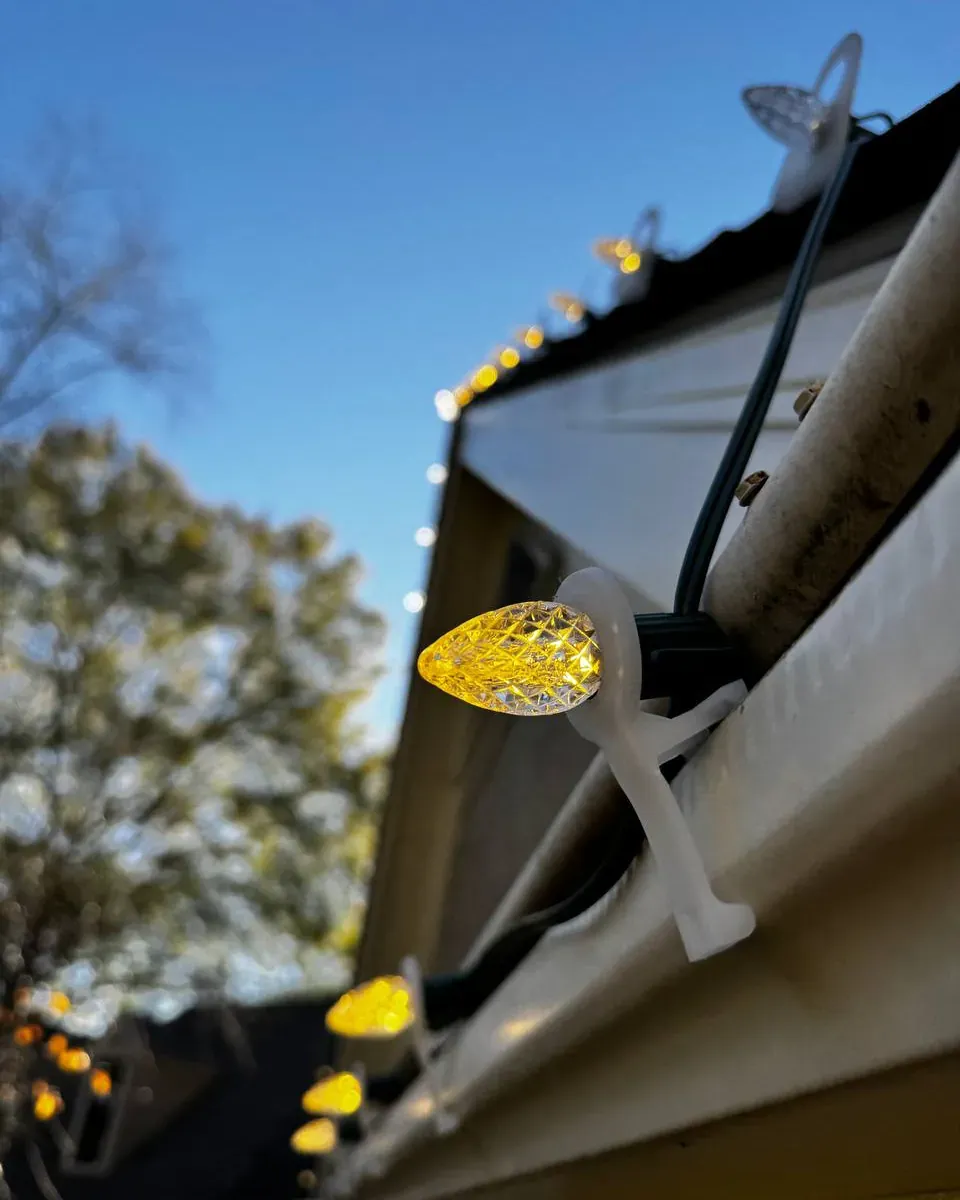
Bulb choice matters more here than almost anywhere else we work. C9 bulbs viewed from ten feet away can look heavy on a small Victorian. C7s, or even closely spaced mini lights on the porch, read as more refined. Warm white at 2700K suits the painted clapboard and the old brick of these blocks. Our warm-white roofline service goes into the bulb and spacing choices in detail.
Midtown's holiday evenings are busy. The botanical garden's holiday light walk at the edge of Piedmont Park draws crowds through December, and the restaurants along Crescent and Peachtree fill up for parties. For businesses, our storefront and restaurant lighting is built around that calendar.