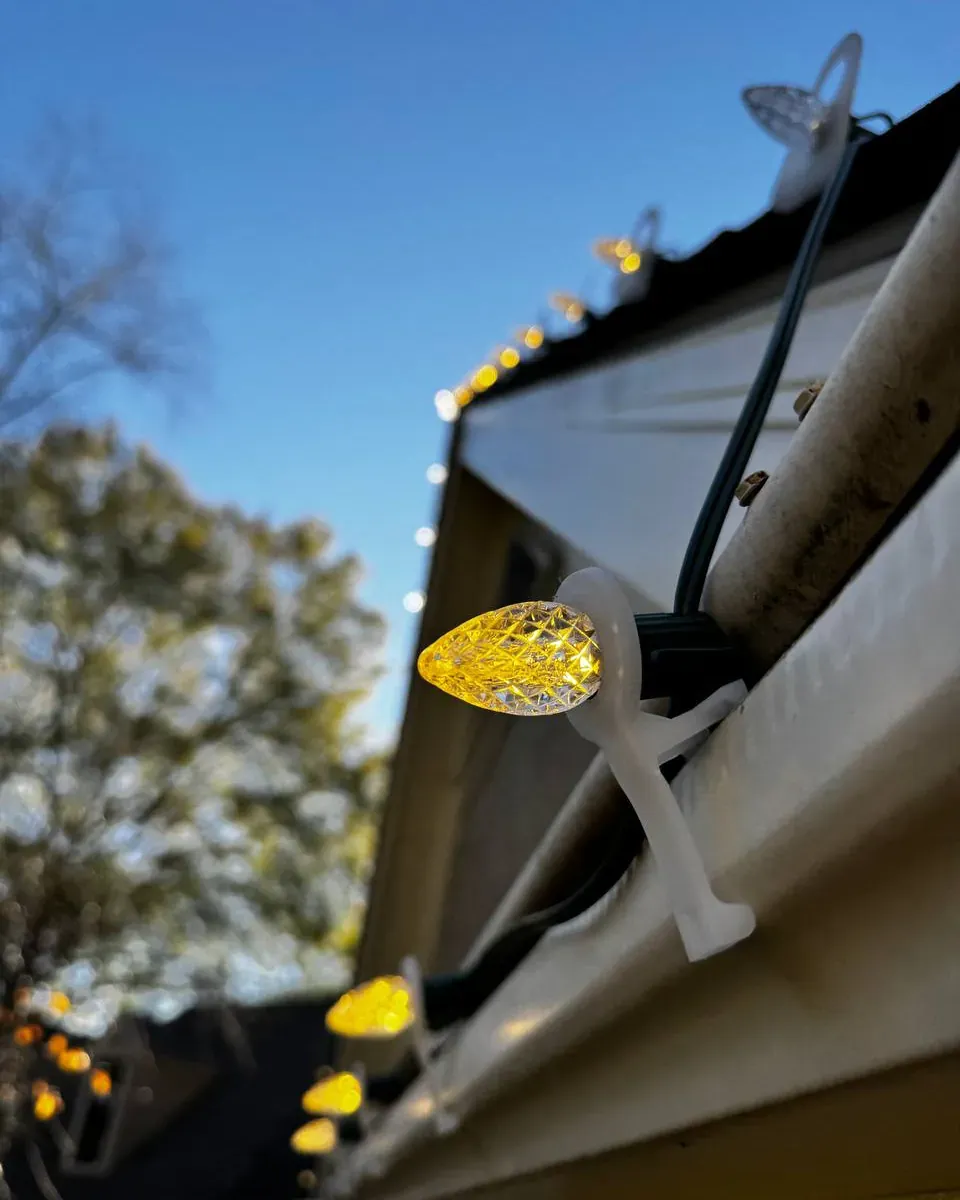
Milton became a city on December 1, 2006, but the land is older than its charter. The name goes back to Milton County, which existed from 1857 until 1931, when it was folded into Fulton. The crossroads at Crabapple was settled in the 1830s, and the Broadwell family's brick store, built around 1902, still stands at the corner. The city has kept its rural character on purpose: pasture, board fences, barns, and houses set deep on their lots.
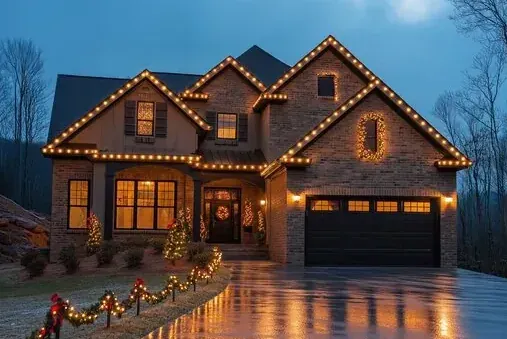
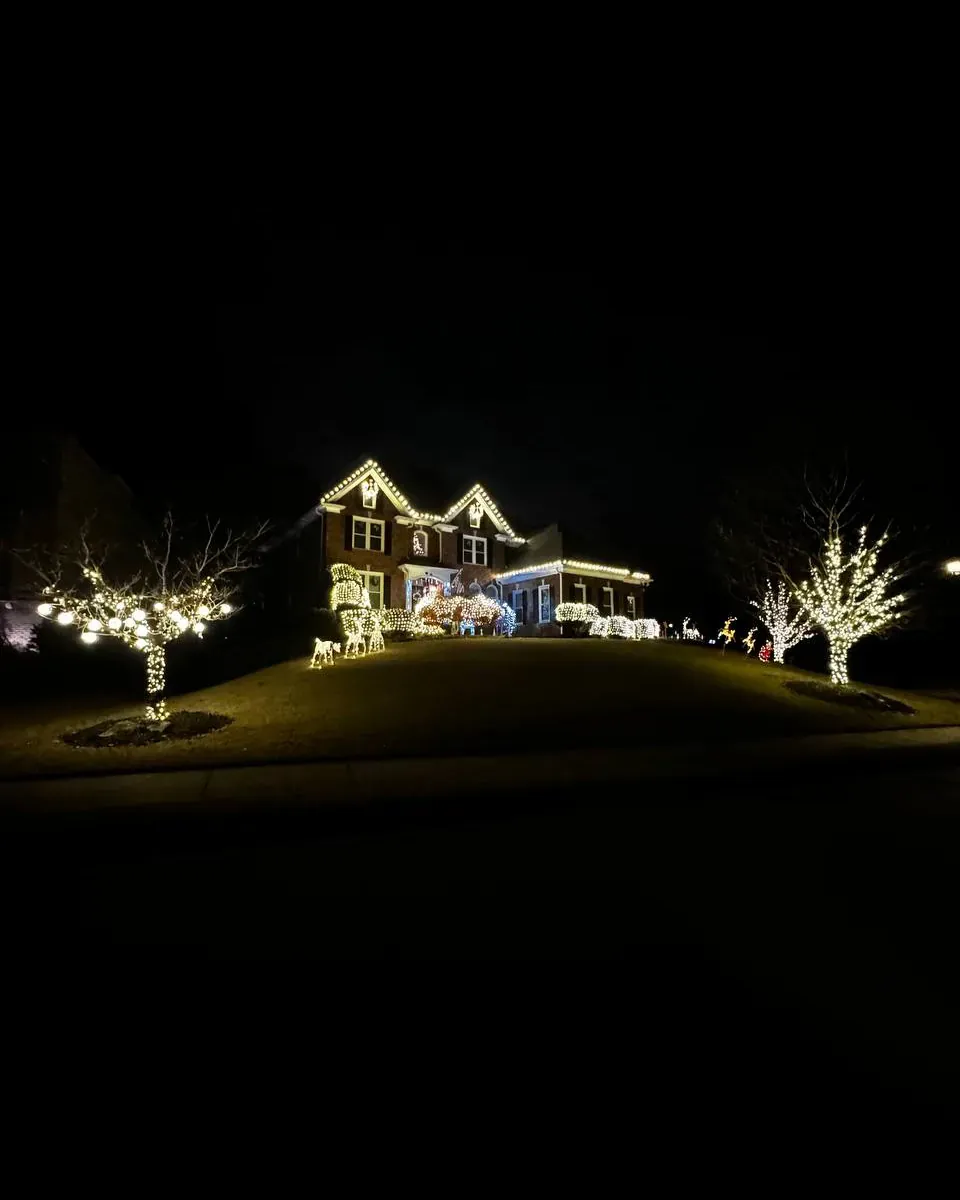
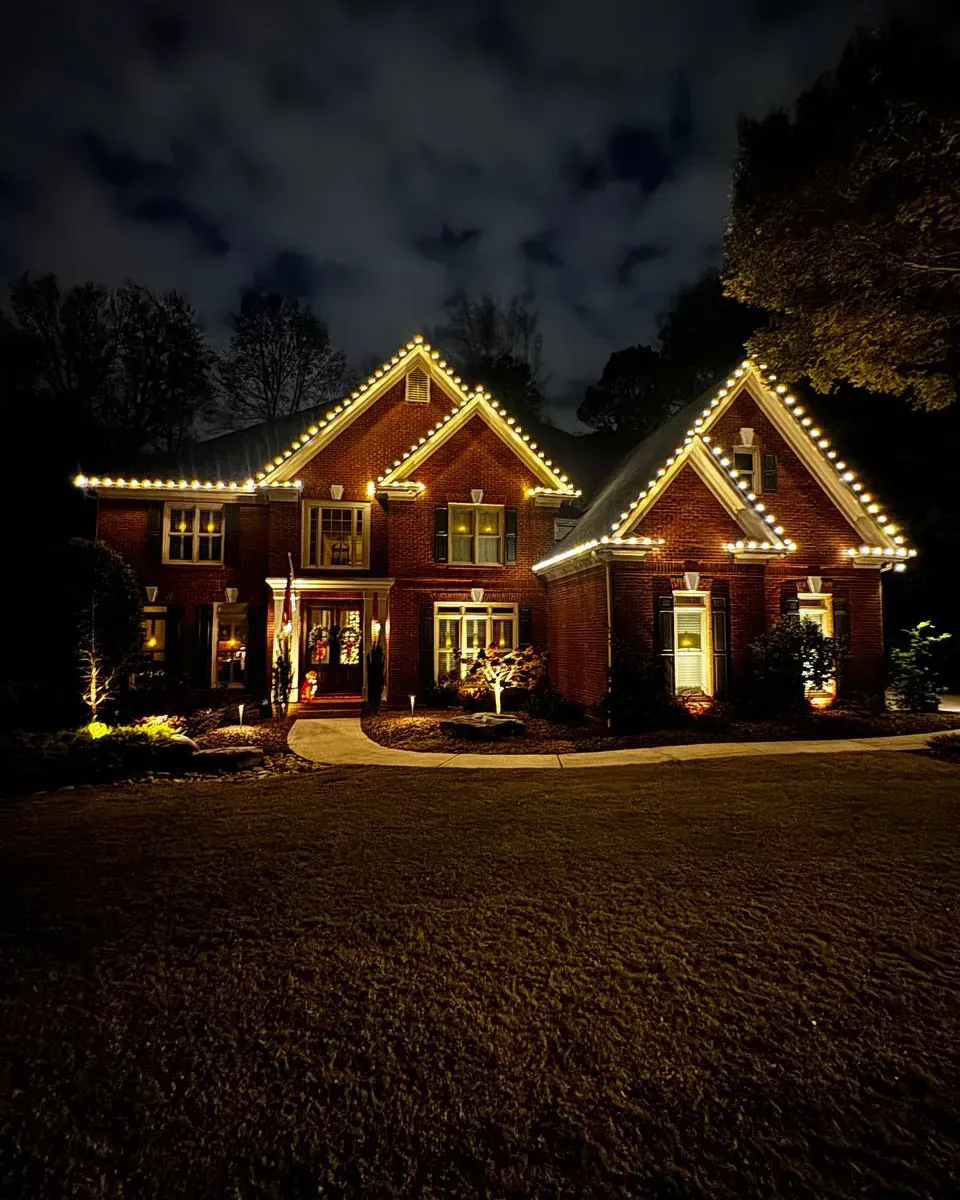
That setting changes how a house should be lit. In a close-in neighborhood the eye is a few yards from the eave and every bulb counts. Out here you take in the whole house at once, from two hundred feet or more, and what reads at that distance is shape. A warm-white line on the main roof edges and the front gables gives the house a silhouette against dark fields. Add a line to every dormer, return, and porch roof and the silhouette turns into noise. Our residential design service starts with that long view and works inward. The Journal explains why warm white, around 2700K, belongs on brick and stone.
The second question is the approach. Owners here often ask whether to light the drive, the fence line, or the house. Our answer is almost always the house first, then two or three trees along the drive so the eye travels toward it, and the fence only when the setting and the budget call for it. Our tree and landscape lighting covers the trunk wraps and the lit limbs that carry a drive.
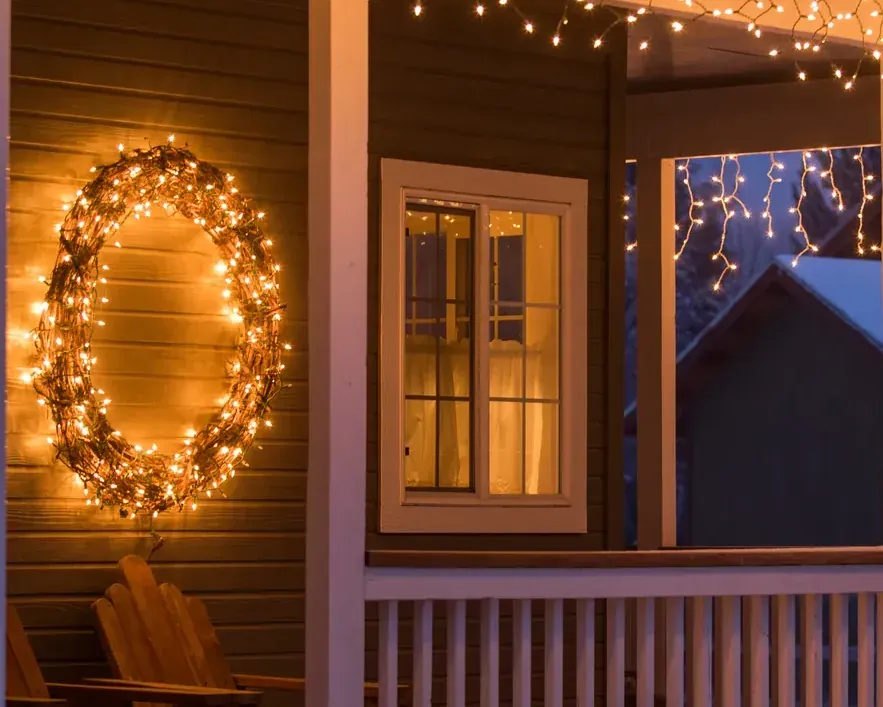
Closer to Crabapple and along Highway 9 the pattern shifts. The subdivisions built through the 2000s and 2010s hold brick and stone traditionals on half-acre and one-acre lots, with three or four front gables and a two-story entry. Those houses want one dominant gable lit, not all of them, and greenery at the door to bring the tall entry down to human scale. Our wreaths and garland are sized to the opening.