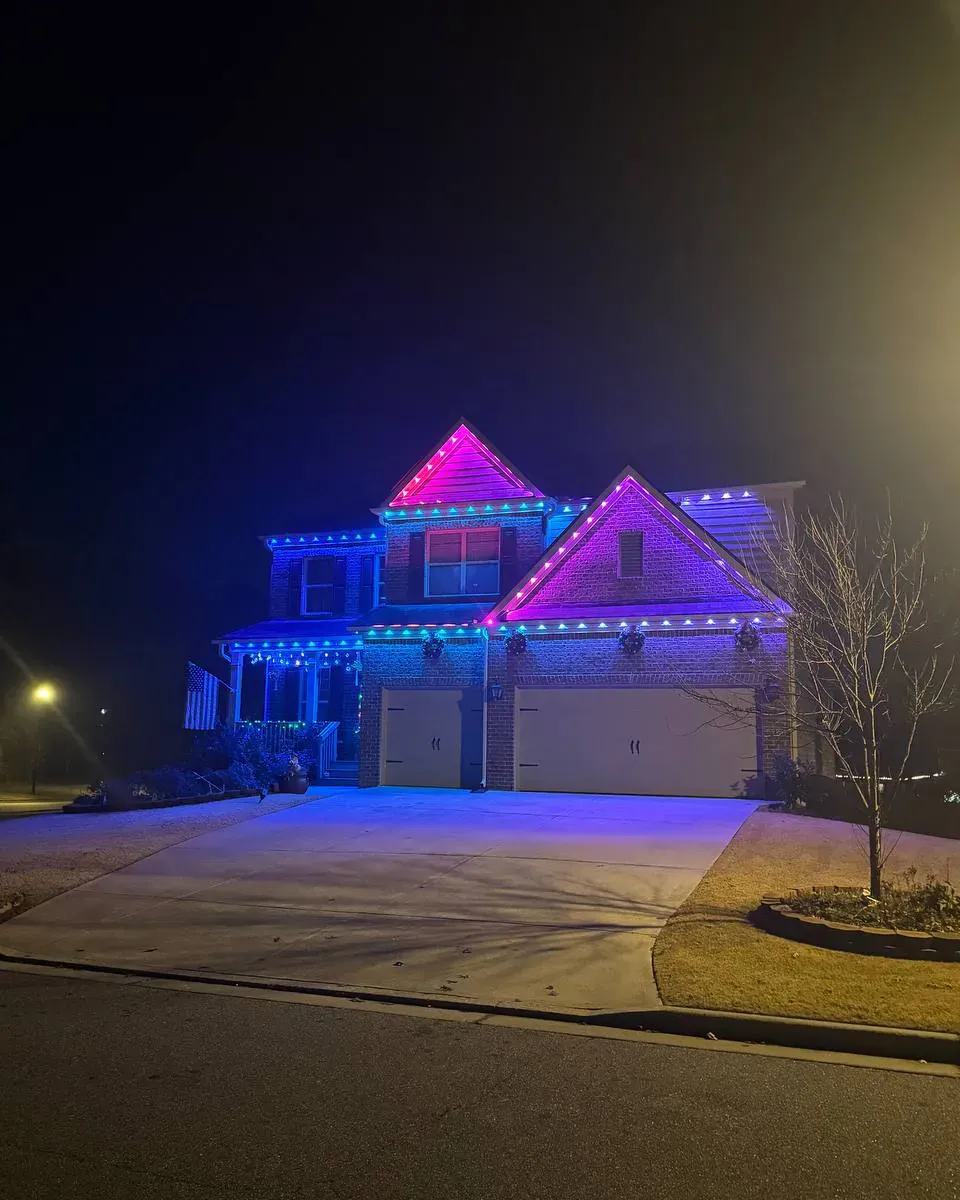
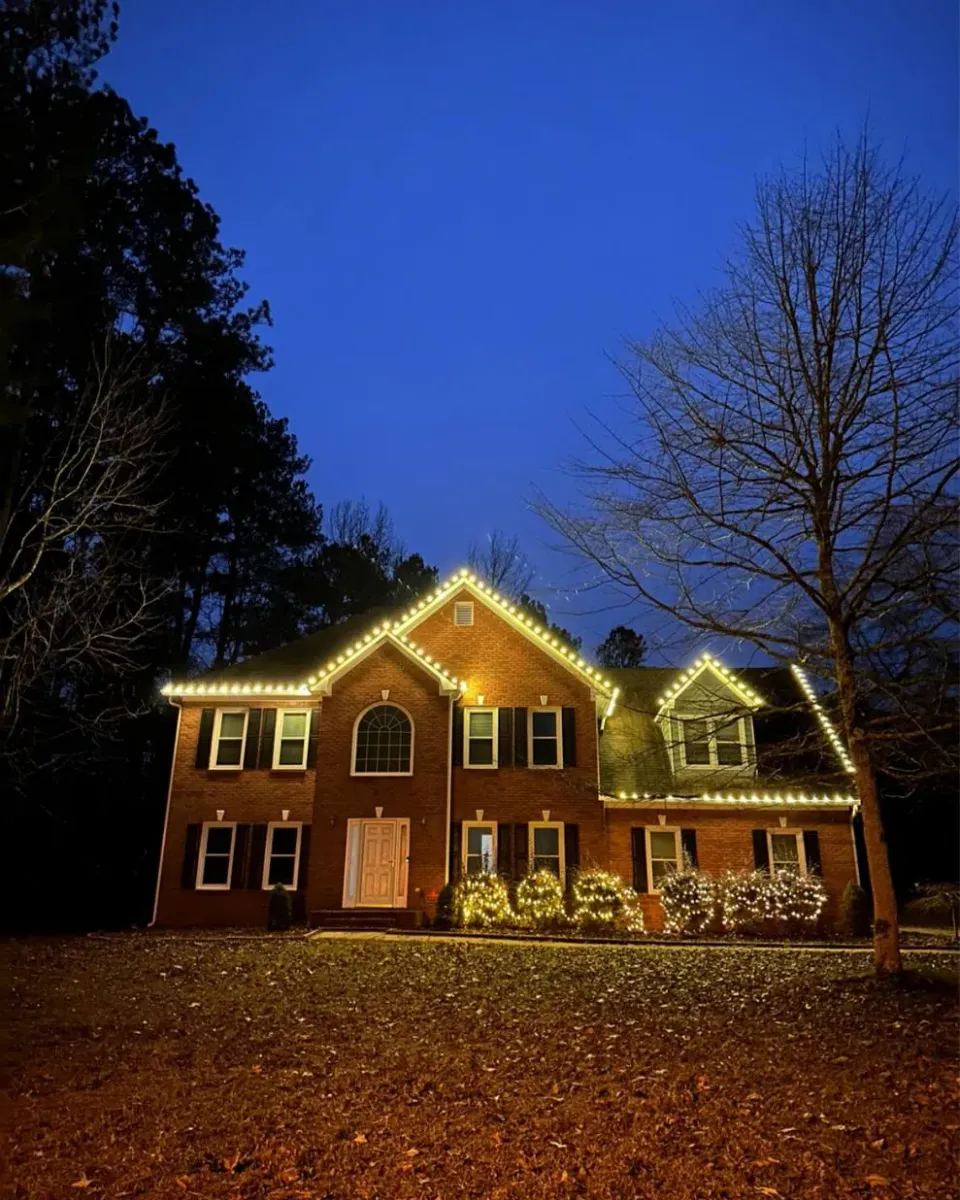
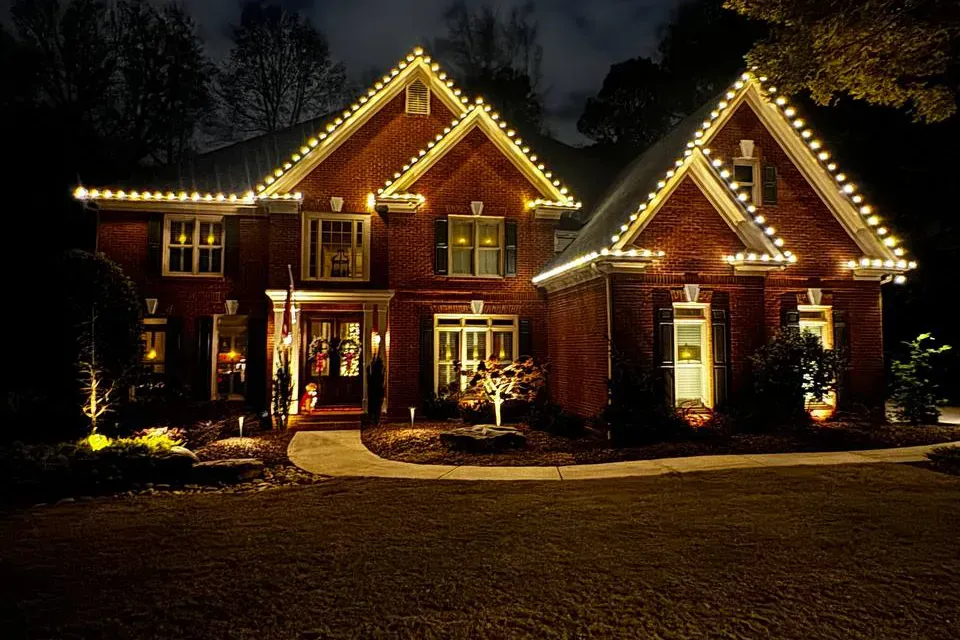
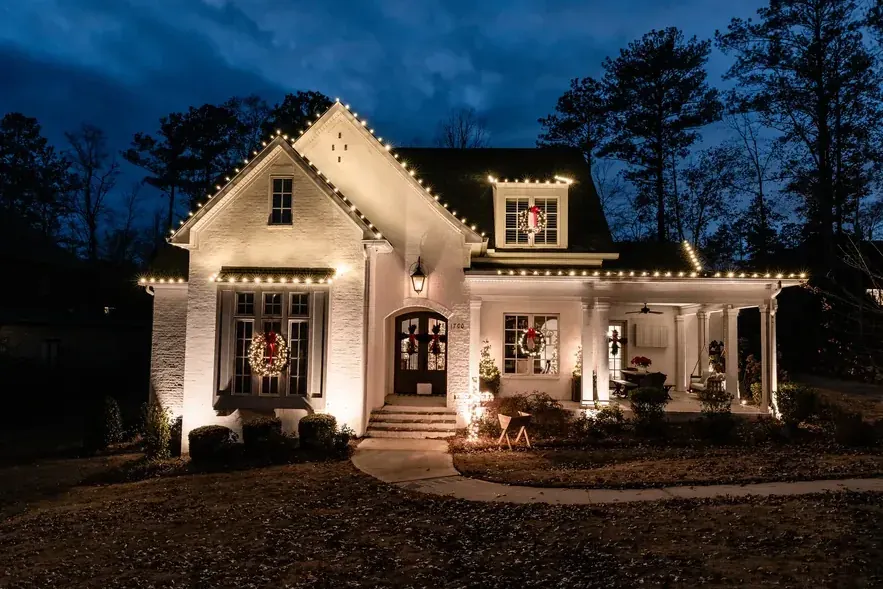
A permanent system has three parts. The first is a track, a narrow channel usually made of aluminum or a rigid polymer, that mounts along the fascia board or just under the edge of the roof. The second is a run of LED light points seated inside that track, spaced at a set interval along its length. The third is a controller, a small box that plugs into an outdoor or garage outlet, sends power and signals down the line, and connects to an app on a phone. The track is typically chosen in a color close to the trim so it blends into the eave by day.
Most systems use individually addressable LEDs, which means each point of light can be set to its own color and brightness. That is what allows a single roofline to show warm white on one night, red and green on another, and a slow color sweep on a third. It is also what makes simple scheduling possible: the controller can turn the lights on at dusk and off at a set hour, with different scenes saved for different dates.
The important difference from our seasonal work is how it attaches. Seasonal strands are held on with shingle clips and gutter clips, and nothing is stapled, nailed, or screwed into the house. A permanent track is different by design. It is fastened to the fascia or soffit with screws at regular intervals, because it has to stay straight and secure through every season. That is a real trade-off, and it is why we look carefully at the fascia and trim before recommending it.
The look is also different. A permanent track produces points of light from a low-profile fixture. It does not reproduce the full, faceted glow of a C9 bulb standing up on a clip, which is the classic roofline look described on our warm-white roofline page. Some people prefer the cleaner, more architectural line of a permanent system. Others want the traditional bulb. Both are reasonable, and we would rather explain the difference than push one.