Skip to content

Dunwoody traditionals, lit with symmetry

Two-story traditionals, split-levels, and ranches from the 1960s and 70s, plus the shops of Dunwoody Village

Much of Dunwoody was built in one confident era. The subdivisions laid out in the 1950s and 1960s, and the growth that followed I-285 in 1970, filled the area with two-story traditionals, brick-front colonials, split-levels, and ranches, many with shutters and a row of evenly spaced front windows. That order is a gift. Matched wreaths in the windows, a clean warm-white eave line, and a lit door make these houses look composed. Our installers have worked Atlanta rooflines since 2018. Text a photo for a free written quote.

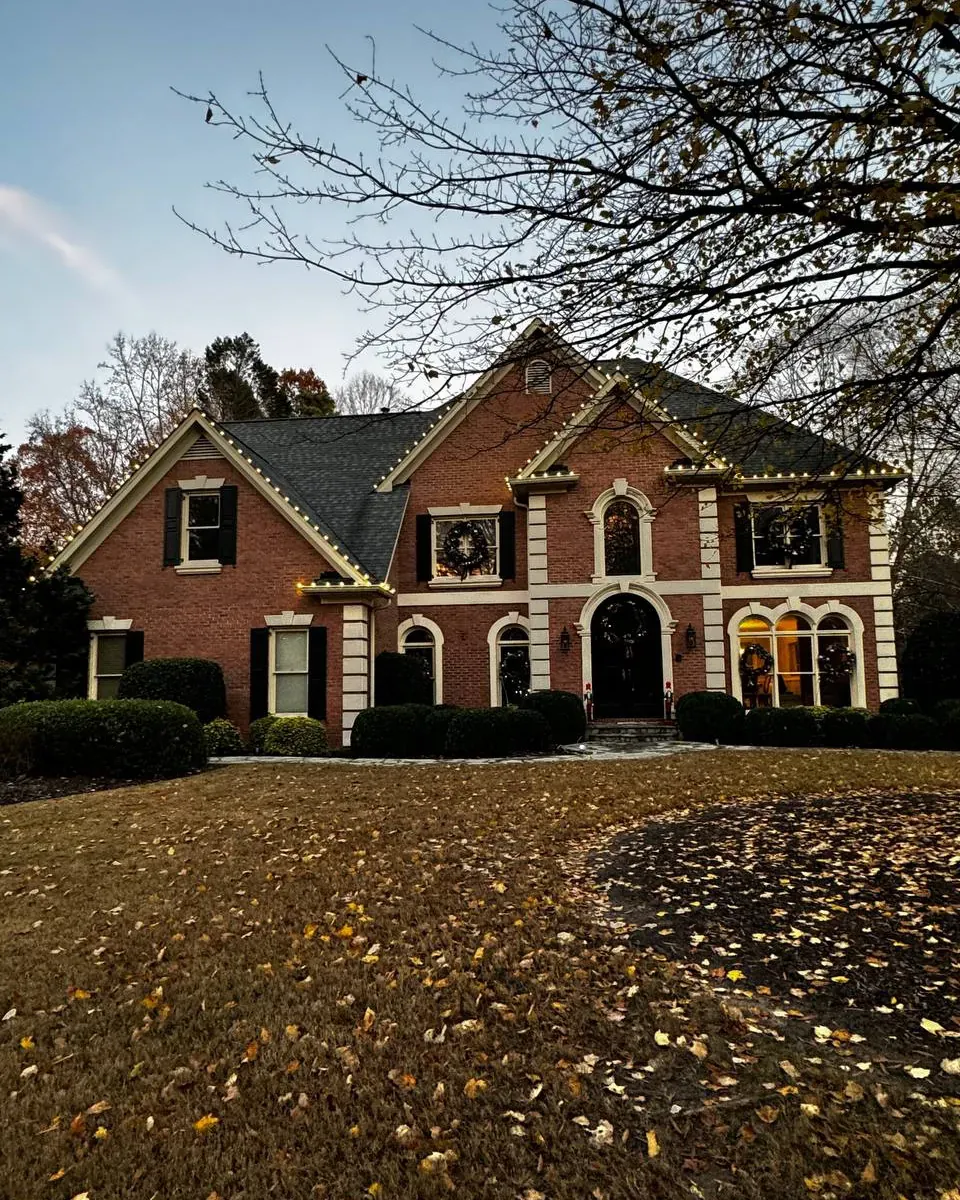
Brick traditional house in daylight with wreaths hung in each front window

A suburban house type, and how to light it well

Dunwoody's roots go back to farms along the old roads. The Donaldson-Bannister Farm on Chamblee Dunwoody Road dates to the 1870s, and its farmhouse was remodeled in the Colonial Revival style in the 1930s. For most of its history the area stayed rural. That changed quickly after the Second World War: new subdivisions went in through the 1950s and 1960s, I-285 was completed in 1970, and in 1971 both Perimeter Mall and the colonial-style Dunwoody Village shopping center opened. The city incorporated in 2008.

That history produced a recognizable streetscape. Many Dunwoody houses are two-story traditionals with a brick front, siding on the sides, black shutters, a centered or slightly offset front door, and five windows across the upper floor. Split-levels and ranches from the same years fill in between, and newer houses have gone up on rebuilt lots. Lots are moderate, lawns are open, and the trees tend to be at the sides and back rather than blocking the front.

A traditional facade like that rewards symmetry more than volume. We usually start with the windows: a wreath in each upper window, identical in size and hung at the same height, gives the whole front a rhythm even in daylight. Then a warm-white C9 line along the main eave, and on the front gable if there is one. The door gets a larger lit wreath or garland around the surround. The result looks orderly and traditional, which suits the architecture. Our wreaths, garland, and greenery service and our warm-white roofline service are often quoted together here.

Much of Dunwoody is organized into subdivisions, many with their own neighborhood associations, so neighbors often compare notes on what goes up in December. In the same month, the city's walk-through holiday lights display at Brook Run Park, a tradition since 2020, draws families from across the area. Houses on the routes in and out see plenty of evening traffic.
  • Matched window wreaths

    Identical wreaths at identical heights in each front window, the most effective single move on a traditional facade.

  • Clean eave lines

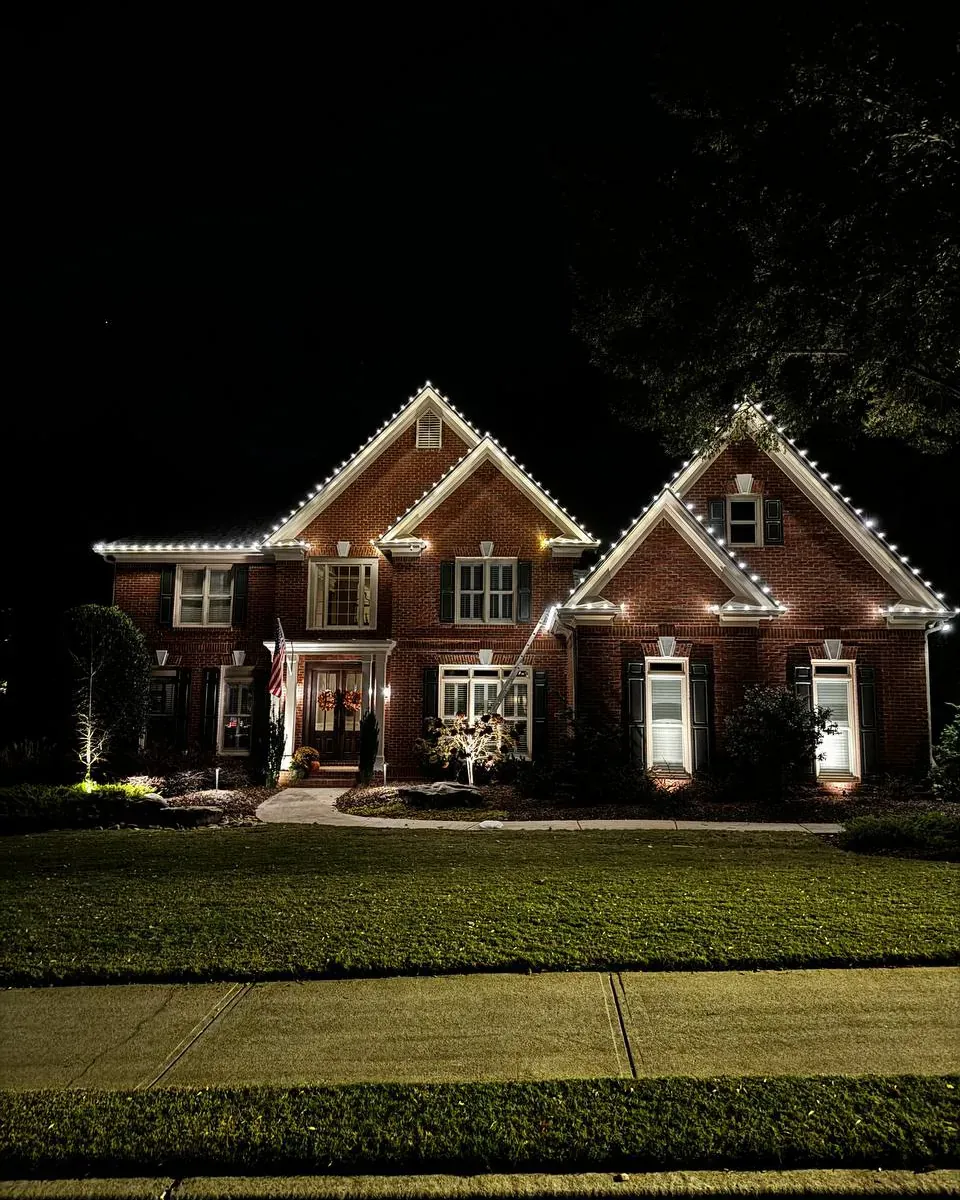
    Warm-white C9s along the main eave and front gable, spaced evenly from corner to corner.

  • Split-levels and ranches too

    Each level of a split-level gets its own line, and ranches get one long, even run.

  • Permanent option for open rooflines

    Unobstructed rooflines on these streets suit permanent lighting that stays up and runs on a schedule.

Wreaths in every front window

Wreaths in every front window

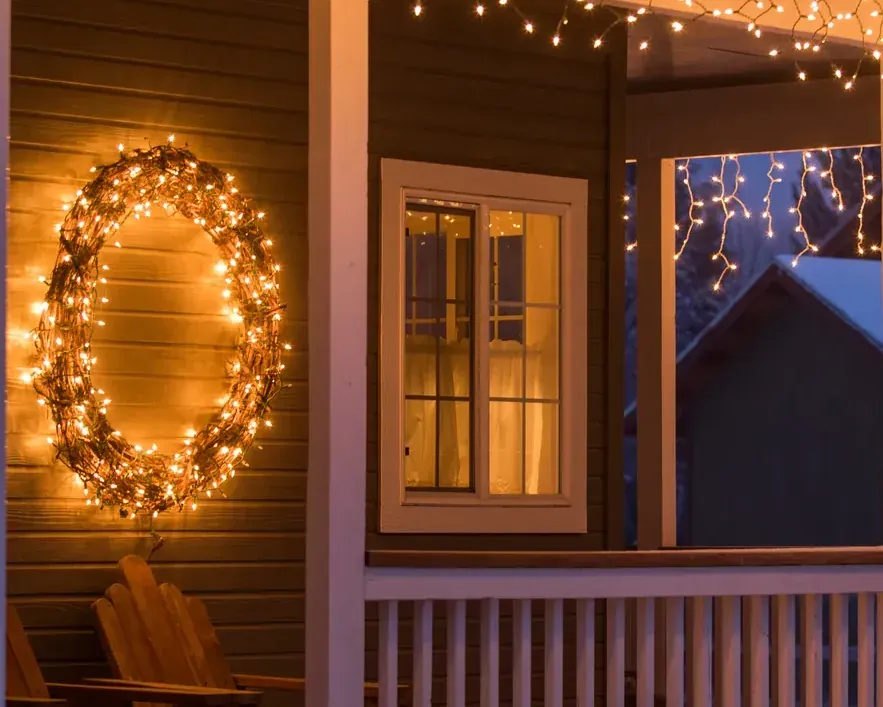
On a brick traditional with a row of shuttered windows, matched wreaths are the backbone of the design. They show in daylight as well as at night, and they set the rhythm for everything else. We hang them from the inside or on non-marking hangers, at a consistent height, and light them with small battery or plug-in lights as the house allows.

The two-story roofline at night

The two-story roofline at night

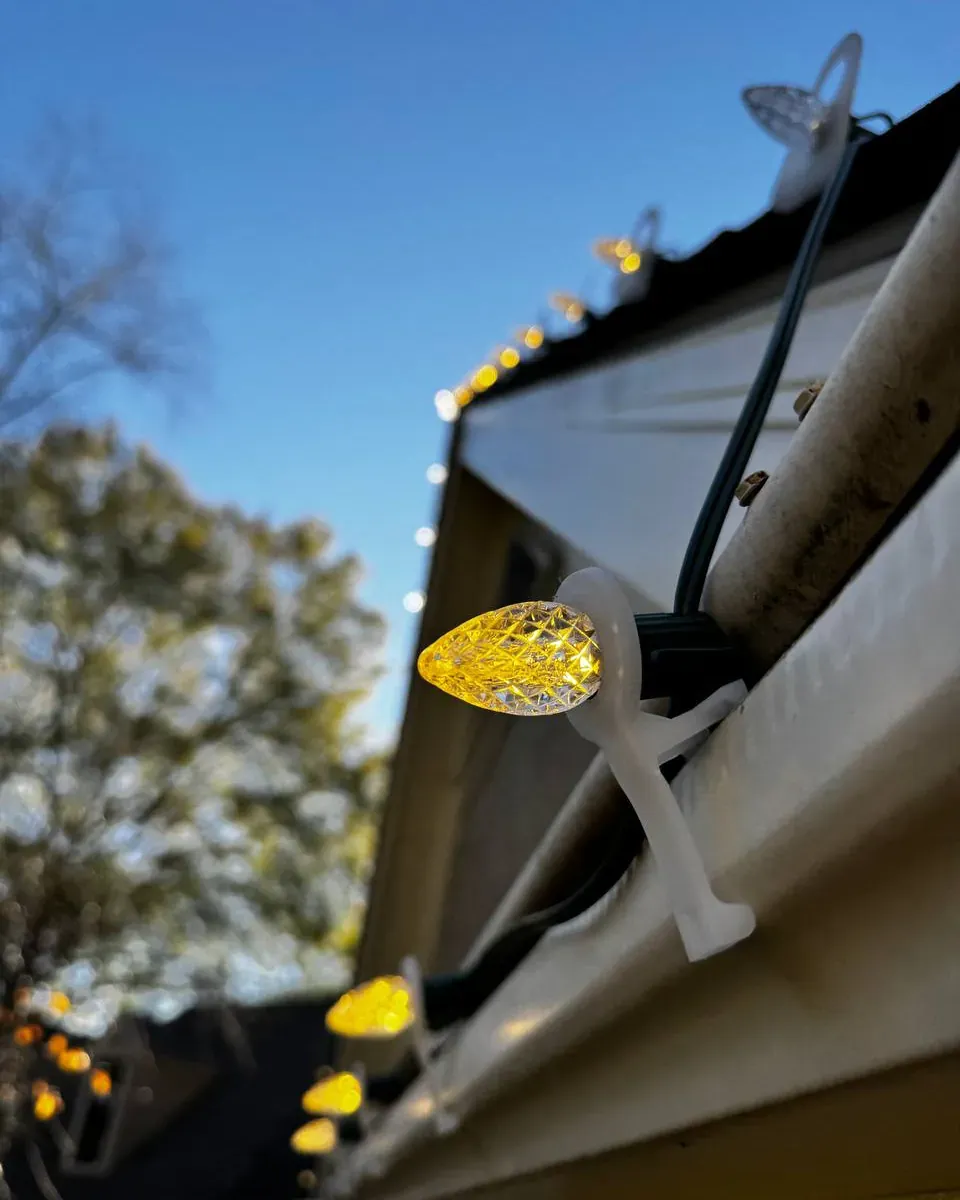
A warm-white C9 line along the main eave and up the front gable gives a two-story house a clear outline. On a house with a front-facing garage wing, we light the main block first and keep the garage roofline lighter, so the eye goes to the entry rather than the garage door.

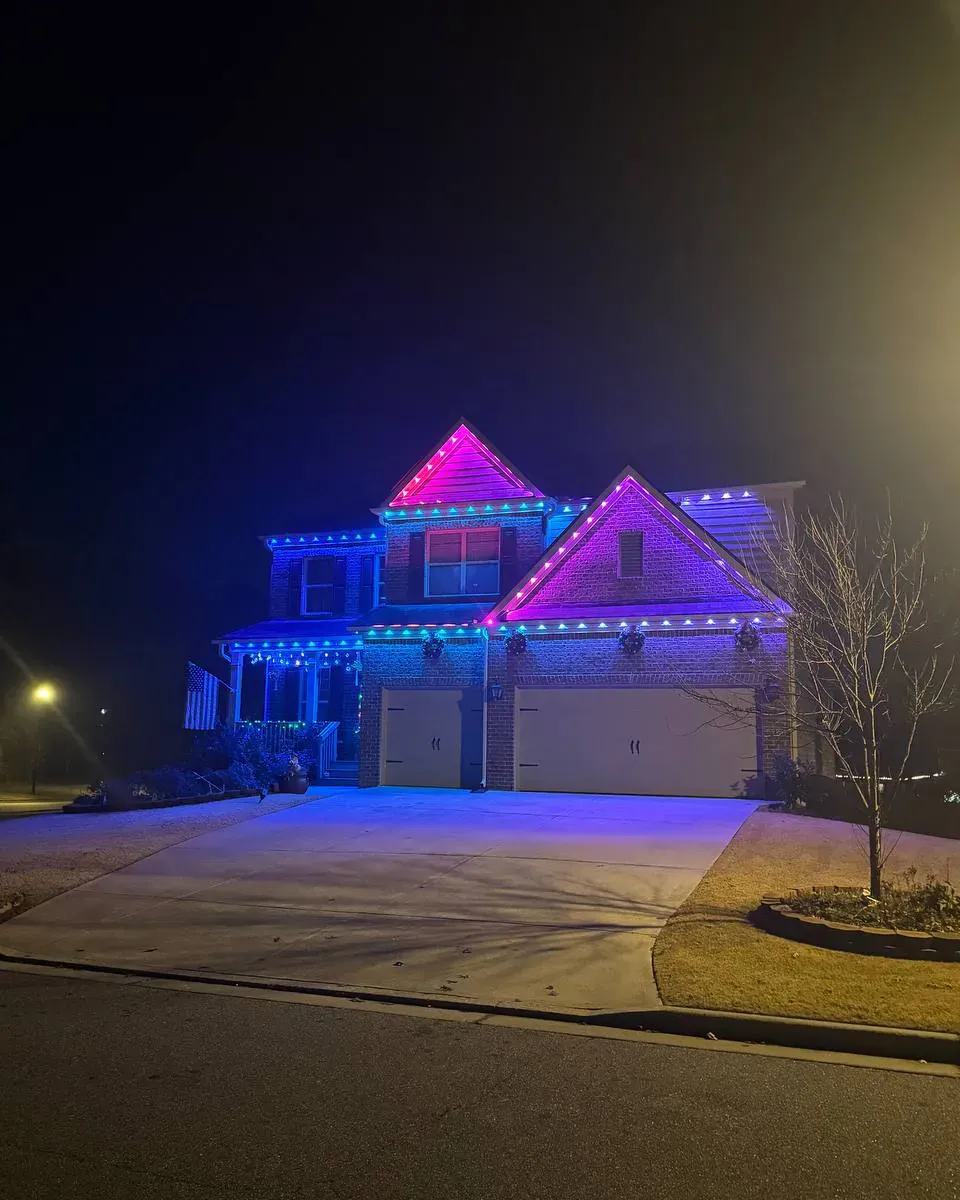
Permanent color on open rooflines

Permanent color on open rooflines

Permanent roofline lighting mounts a low-profile track under the trim, and color-capable systems can run warm white at Christmas and other colors for other occasions. On the open, easy-to-reach rooflines common here, it is a practical choice for owners who want lights more than once a year. The track follows the same lines we would trace with seasonal strands, the main eave and the front gable, so the house keeps its outline. For owners who prefer to stay seasonal, the warm-white C9 plan goes up each fall and comes down each January instead, and nothing about the design has to change between the two.

Shrubs, walks, and the front door

Shrubs, walks, and the front door

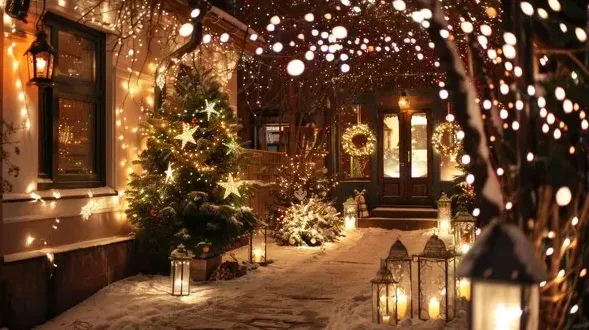
Foundation shrubs along a brick front are an easy place to add depth. Netted boxwoods and hollies, a lit wreath on the door, and garland around the entry give the ground floor a warm base under the roofline. Our trees and landscape service covers shrubs and front-yard trees.

Timers, service, and January

Timers, service, and January

A timer is set at install, so the display runs every evening on its own. If a strand goes out, text a photo to (470) 380-7797 and it goes on the next route. In January everything comes down and is labeled for next season. We also work nearby in Sandy Springs and Brookhaven.

Dunwoody Village and nearby shops

Dunwoody Village and nearby shops

Dunwoody Village was built around a colonial theme, with brick, white trim, and small-paned shop windows, and the businesses there and along Chamblee Dunwoody Road suit a traditional holiday look. Garland with warm-white lights over the doors, wreaths in the windows, and a clean line along the roof edge echo the houses nearby. For restaurants with outdoor seating, string lights over the patio extend the look into the evening. We work outside business hours, keep ladders off walkways while customers are present, and set timers to the posted hours. The storefront and restaurant service covers what is included, and each property gets its own written quote.

Dunwoody homeowners ask

Colonials, split-levels, neighborhood looks, and permanent lights.

What is the best display for a two-story colonial?

Symmetry. Wreaths in each upper window, a warm-white line along the main eave, and a lit wreath or garland at the door. It looks traditional and orderly, and it reads well both day and night.

How do you light a split-level?

We trace each roof section separately, so the upper and lower levels read as distinct parts of the house. Spacing is kept the same on both. Lit shrubs at the lower level help tie the two together.

Can our street coordinate a consistent look?

Yes. If several neighbors book together, we can keep bulb type, color temperature, and wreath size consistent across the houses. Each home still gets its own written quote.

Is permanent lighting a good fit here?

It often is, because many Dunwoody rooflines are open and easy to reach, and a permanent track can be used for other holidays too. Our permanent roofline lighting page explains the options, including color-capable systems.

Do you store the lights after the season?

Yes. January takedown removes everything, and strands and wreaths stay stored with us until next season through our takedown and storage service.

Request a free Dunwoody quote

Text a photo of the front of the house and the address to (470) 380-7797. We will send back a written, itemized quote listing every run, wreath, and shrub.

Email christmaslightsofatl@gmail.com

Or send the details here

All neighborhoods
Text us (470) 380-7797

Text us a photo

Scan with your phone's camera to start a text to (470) 380-7797. Attach a picture of the front of the house.

QR code that starts a text message to (470) 380-7797
Use the quote form instead